Date: 09/04/2026
An expert perspective on attention, data-driven judgement and the eye brain connection.
Associate Professor Joanne Fielding brings extensive academic and research experience in cognitive neuroscience and eye movement science. Her work contributes to the scientific foundation underpinning BrainEye’s approach to structured, longitudinal observation.
Her perspective reflects a consistent theme: understanding how attention, decision-making and eye movement behaviour are connected within the broader functioning of the brain.
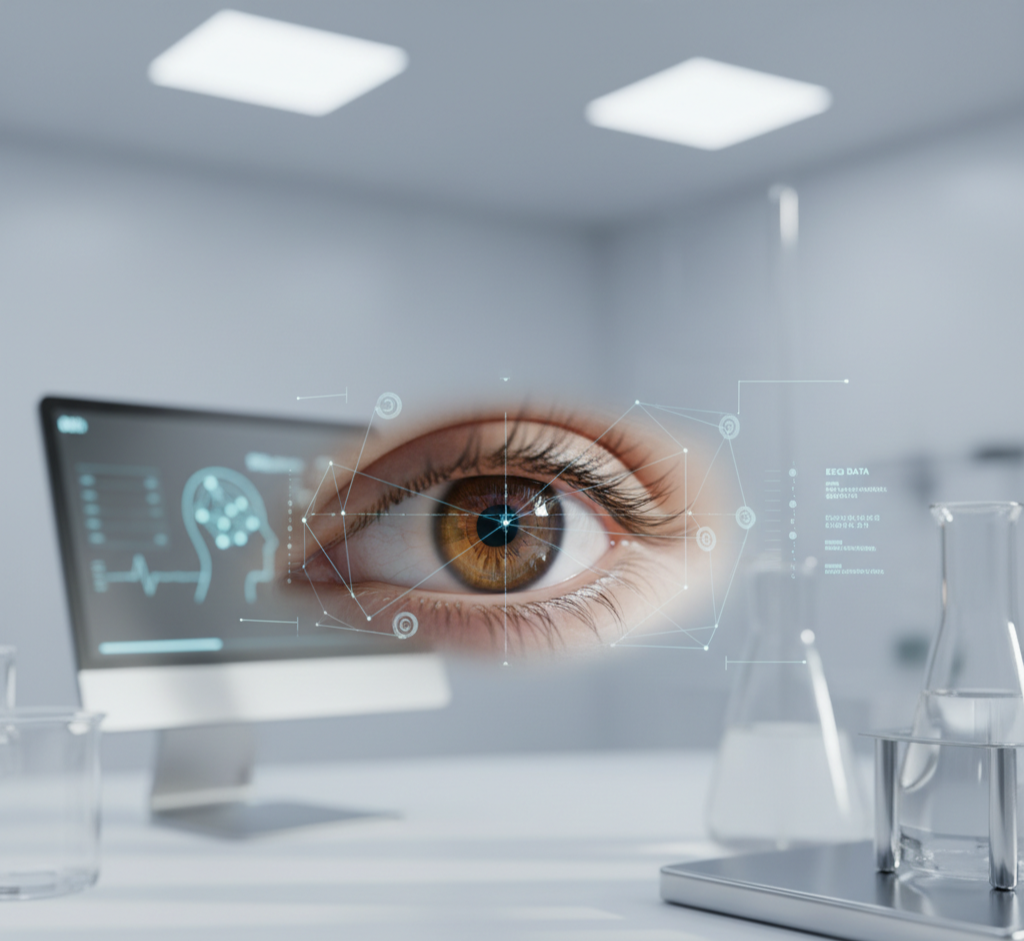
Attention as a Neural Process
Attention is often described in simple behavioural terms. Associate Professor Fielding emphasises that it has a clear neurophysiological basis involving multiple interconnected brain systems.
As she explains, attention is supported by wide-ranging neural connections: “Attention has a neurophysiological basis involving wide-ranging connections between the prefrontal cortex, thalamus, brainstem and basal ganglia.”
In this sense, attention is not a single process but a distributed network that allows the brain to prioritise competing information and determine what requires focus.
Understanding this neural structure helps explain why behavioural signals, including eye movements, can offer meaningful insight into how the brain is functioning at a given moment.
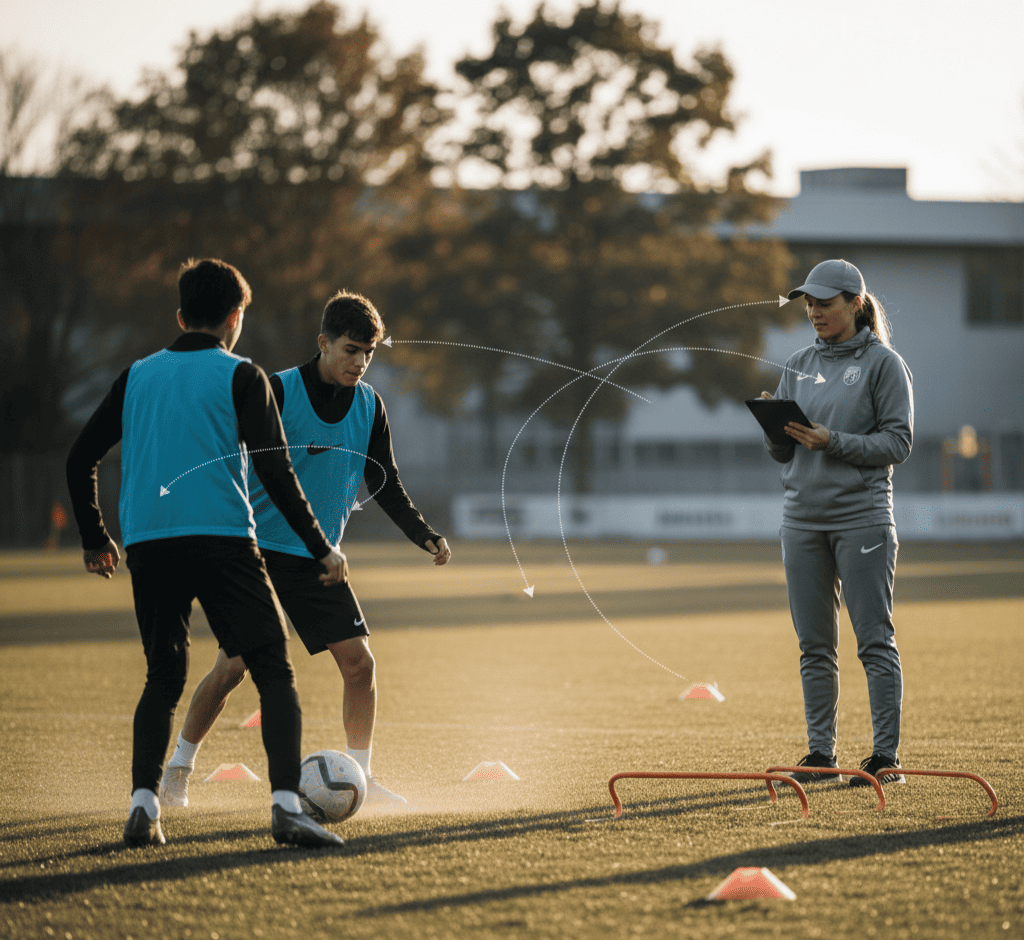
Judgement and Data
When discussing good judgement in scientific and applied environments, Associate Professor Fielding offers a clear perspective: “Making data driven decisions!”
Structured data provides a reliable foundation for interpretation, particularly in environments where variability is expected. In both research and performance settings, repeated observation allows trends to emerge that individual measurements cannot reveal. This approach supports more consistent evaluation and reduces reliance on isolated results.
The emphasis on evidence-based interpretation aligns closely with BrainEye’s focus on longitudinal observation of eye movement behaviour across time. Patterns observed repeatedly provide context that single observations may not.
The Brain Eye Connection
The relationship between the brain and the eyes is central to Associate Professor Fielding’s work.
As she explains: “The brain and eyes are inexorably linked.”
The retina itself forms part of the brain, and a substantial proportion of neural activity within the central nervous system is involved in processing visual information and generating eye movements.
In fact, more than half of all neurons entering and leaving the brain contribute to visual processing and eye movement control. Due to this close relationship, patterns in eye movement responses can provide meaningful insight into neurological function.
The way the eyes respond to specific stimuli can reveal information about how different brain systems are operating and, in some cases, may even point toward activity in particular regions of the brain.
This connection forms the scientific basis for observing eye movement behaviour as part of broader neurological evaluation.
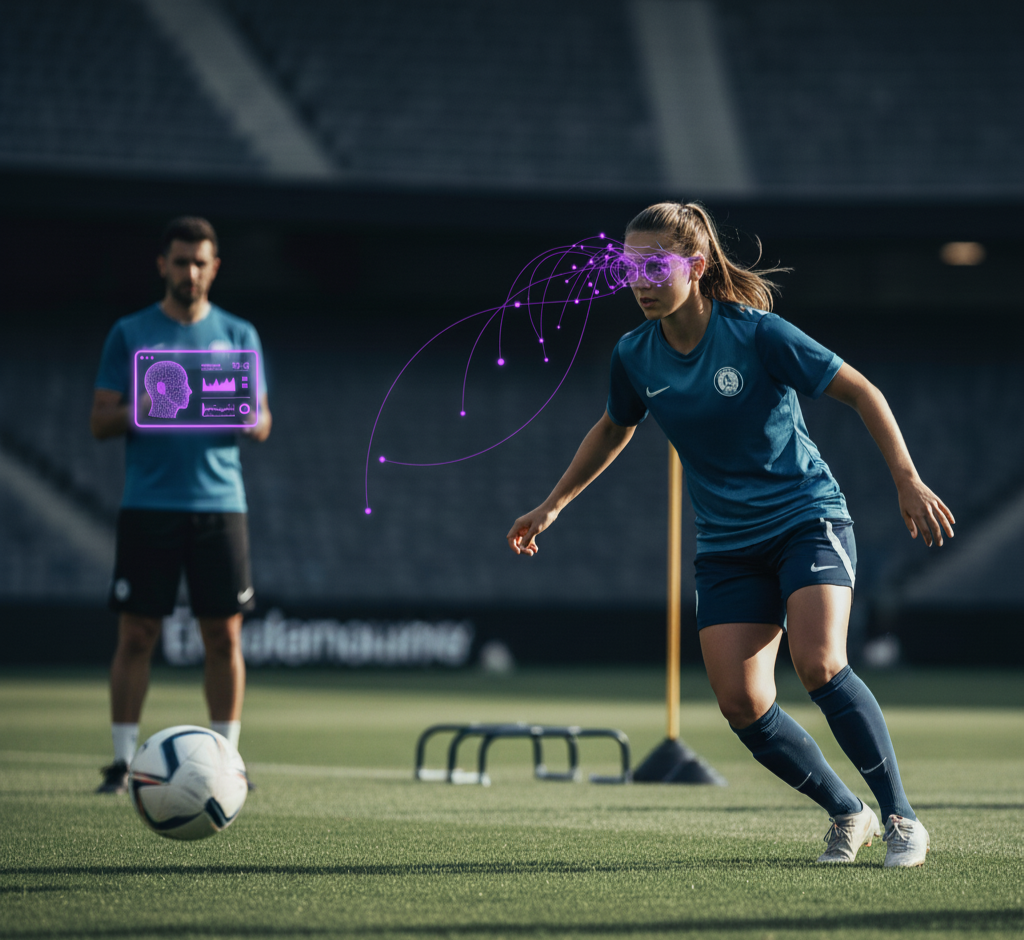
Performance Environments and Player Welfare
Within sport environments, Associate Professor Fielding highlights an important challenge.
While many sporting organisations recommend strict head injury assessment protocols, these guidelines are not always enforced consistently, particularly at grassroots levels.
She notes that awareness of these recommendations can vary, and protocols may be overlooked in practice. As a result, player welfare may not always receive the same level of attention outside elite environments.
This raises an important consideration for sport more broadly. Accessible monitoring tools may help support welfare discussions across all levels of participation, not only professional sport.
Structured observation can contribute to better awareness without adding complexity to existing processes.

Practical Innovation
Associate Professor Fielding also reflects on her experience working with BrainEye technology and how it compares to the laboratory systems she typically uses in research.
Much of her work has relied on specialised eye tracking equipment capable of extremely high sampling rates. As she explains: “I’m more accustomed to working with lab-based trackers that collect data up to 2000Hz — unlike a smartphone’s 30–60Hz.”
Because of this background, the idea that an app-based eye tracker could provide meaningful insights initially seemed unlikely. However, the results from applied studies challenged that expectation: “I was surprised that an app-based eye-tracker could offer such utility across a range of use cases.”
In particular, findings from BrainEye’s AFL research demonstrated that accessible technology could still produce valuable observations in real-world environments.
As she reflects: “Our AFL study results surprised me enormously.”
For Associate Professor Fielding, this experience reinforces an important point. Innovation in applied neuroscience is not defined solely by technical capability, but by how effectively tools can support observation and understanding outside the laboratory.
Accessible technologies, when applied responsibly, can extend structured neurological observation into environments where traditional research equipment would not be practical.
A Long-Term Perspective
When asked what matters most in the long run, Associate Professor Fielding offers a simple but powerful reminder: “Taking care of the most important organ in the human body.”
Sustained attention to brain health requires consistency, responsibility and structured observation.
Across research, clinical practice and sport environments, the principles remain aligned: attention has a biological foundation, data supports judgement, and the eye brain connection provides valuable insight when interpreted carefully over time.
Associate Professor Joanne Fielding is the Primary Chief Investigator at MOMRL and research fellow in the Department of Neuroscience, with 20+ years of experience pioneering ocular motor science and author of 100+ published papers.

More Featured blogs
8 Facts About Sports Concussion
Concussions are often underestimated, but they can have serious, lasting effects on the brain. Uncover the hidden facts about concussions in sport, and learn how to protect yourself and your loved ones.
What you need to know about brain health
Your brain controls everything you do. But how often do you consider its health? Discover insights and practical tips to help you understand and improve your brain health and overall well-being.
Concussion in Kids: What Parents Must Know
Concussions in children can be difficult to detect, but acting quickly can make all the difference. We explore a real-life example and share essential tips on spotting signs and managing your child’s recovery.
Discover more about how BrainEye works, or download the app via the Apple App Store or Google Play Store.